Robust governance provides a sustainable way to mitigate third-party and supply-chain risk by establishing clear ownership, accountability, and transparency across all of the organization's vendor and partner relationships.
Navigating Third-Party Risk with Robust Governance

Modern businesses rely on a growing assortment of cloud providers, SaaS apps, contractors, and supply-chain partners. Each relationship helps accelerate growth and innovation. But each also introduces risk by pushing the organization's total attack surface well beyond the comfortably secure boundaries of its on-premises infrastructure.
Recent history shows us how significant this added risk can be. The SolarWinds compromise in 2020 showed in stark relief how trusted updates from software supply-chain partners can deliver malicious code to thousands of customers. The MOVEit breach three years later reinforced how quickly these kinds of third-party attacks can expose huge troves of sensitive data across multiple industries. Even identity-management vendors like Okta have been exploited, further proof that systems intended to protect access can themselves become points of vulnerability.
Opacity makes complex partner and third-party ecosystems fragile. Organizations typically fail to fully account for all of the entities that have access to their data. They struggle to discover which vendors depend on which sub-vendors, or how security controls are enforced up and down the supply chain. Shadow IT and decentralized procurement only compound the issue.
That's put CISOs in a bind. They're fully accountable for environments both within and outside their direct control. They know that perfect visibility is unrealistic, but inaction is untenable. This is where good governance comes in. Robust governance provides a sustainable way to mitigate supply-chain risk by establishing clear ownership, accountability, and transparency across all of the organization's vendor and partner relationships.
Governance as a Layer of Defense
Governance is often confused with vendor management, but the two serve different purposes. Vendor management is administrative; it deals with issues like the signing of contracts and the setting of service levels. Governance, meanwhile, is focused on making sure the relationships defined by the contracts and service-level agreements (SLAs) are actually working in the best interest of the organization. Governance ties operational processes to executive accountability. At its best, governance delivers three outcomes: It assigns clear ownership of vendor relationships to internal sponsors who understand their risk exposure; it provides leaders the transparency needed to identify vulnerabilities and track mitigation efforts; and it enforces consistency in standards being applied across all departments and lines of business, regardless of project urgency or deal size.
Treating vendor governance with the same rigor as financial oversight elevates the enterprise from basic compliance to full-fledged safeguarding of the business. Where financial governance protects shareholder value, security governance protects operational integrity. Both are essential to business survival. When diligent governance is embedded into procurement, legal, and technology processes, security becomes a business growth enabler rather than a bottleneck. Done well, governance lets organizations innovate with confidence as new vendors and technologies are thoughtfully and intentionally integrated within defined, monitored boundaries.

Building a Framework That Balances Speed, Control, and Technology
Strong governance is more than a set of policies; it's a cultural shift in organizational engagement that becomes ingrained in the way teams across the enterprise approach the challenge of vendor and partner engagement. Five steps are essential: identify and list all vendors; categorize them by risk; monitor them regularly; ensure they are included in incident response plans; and clearly detail all rules in every contract and service agreement. Those elements in detail:
Visibility
Organizations can't govern what they can't see. A comprehensive inventory of all third-party relationships, including sub-processors and cloud service providers, is table stakes for a robust approach to vendor governance. Maps of data flows, integration points, and access privileges form the foundation for every subsequent control.
Risk Classification
Various vendors call for varying levels of scrutiny. Third parties should be classified based on the sensitivity of data they handle, and the level of system access they maintain. Other factors, such as their potential to disrupt operations or their integration with high-impact processes like payroll or CRM also warrant deeper, more frequent assessments.
Continuous Monitoring
As recent breaches and compromises have repeatedly shown, yearly vendor checks are no longer sufficient. Criminals target vendors between reviews, so it's essential to continually track vendor security. Tools can monitor changes to a vendor's certifications, public vulnerabilities, or reports of breaches, allowing problems to be identified quickly and addressed.
Incident-Response Alignment
When an incident hits, coordination saves time and reputation. Supply-chain partners and vendors must be part of the response ecosystem. All parties must be contractually required to maintain aligned security playbooks and shared escalation timelines. Joint tabletop exercises can help surface troublesome assumptions that might otherwise only be revealed during a crisis.
Contractual Controls
Governance must have teeth. Contracts should clearly outline security obligations, specify breach-notification windows, and grant audit rights. Include right-to-test clauses for red-team evaluations and set explicit data-handling standards. Contracts should clarify responsibility, not outsource it.
When all five pillars are in place, governance becomes a continuous cycle, driving assessment, accountability, and adaptation. Technology can support each of these pillars but cannot replace them. Risk-management platforms and automated questionnaires help scale oversight, but they cannot decide what level of risk is acceptable or who should act in the event of an incident. Dashboards reveal information; governance converts that information into decision-making.
CISOs that grasp this distinction can use technology strategically. Automation handles volume. Governance determines value. The end game isn't about collecting more data; it's about gaining actionable clarity into who is responsible, how issues are resolved, and when escalation is necessary.
Culture, Collaboration, and Measuring Maturity
Supply-chain governance succeeds only when all of the competing interests across the entirety of the organization embrace it. When it comes to engaging with vendors and suppliers, security teams are focused on defense, procurement teams seek efficiency, legal is focused on protection, and IT and operations demand uptime. Good governance harmonizes these interests through shared definitions of acceptable risk and appropriate processes for mitigation.
When departments communicate regularly and share risk dashboards, issues surface and are addressed early. Regular meetings between procurement, legal, and IT foster alignment. Executive sponsorship ensures governance receives the attention and the funding it needs to be effective long term.
The best supply-chain governance programs drive progress by measuring how vendor security improves over the course of the effort. Mature governance leverages metrics like:
- The percentage of critical vendors with validated incident-response plans
- The average time to remediate vendor-related findings
- The proportion of third parties under continuous monitoring
- The decline in untracked or shadow vendors over time
These measurements help frame what success looks like for the program. They demonstrate resilience rather than mere compliance. Leadership discussions shift from "are we secure?" to "how secure are we, and how do we improve?"
Equally important is communication. When employees view governance as a partnership rather than a policing mechanism, participation blossoms. Transparency builds trust and trust transforms governance from a set of rules into a shared discipline.

Building Executive Confidence Through Governance
CISOs face a near impossible mandate. They must protect systems they do not own, vendors they did not select, and dependencies they often struggle to fully map. Governance is the mechanism that introduces controls with confidence.
With a solid governance gameplan, security leaders can brief boards with certainty, swapping vague assurances for evidence-backed assertions. They can say with confidence: "We've identified our top twenty high-risk vendors. Here is how they are monitored, what mitigation plans exist, and what the exposure would be if one fails."
This kind of clarity changes conversations at the highest levels of the org. Confidence doesn't eliminate risk, of course, but it can greatly bolster the understanding, management, and communication of risk. Without the confidence that governance engenders, third-party risk programs devolve into spreadsheets and guesswork. With it, supply-chain risk programs grow more disciplined, more auditable, more measurable. All of which reinforces organizational trust.
The business benefits of good supply-chain governance are tangible. It accelerates vendor onboarding by standardizing expectations. It simplifies audits by consolidating evidence. It reduces costs by lowering the probability of a crisis. Vendors that align with governance principles tend to be more reliable, in turn reducing operational friction. From a market perspective, governance is quickly becoming a competitive advantage. Customers, investors, and regulators increasingly demand proof of strong third-party oversight. Organizations that can demonstrate mature governance reduce risk and strengthen their credibility. In a world where trust influences purchasing decisions, such credibility is currency.
Conclusion: Bigger Supply Chains Demand Diligent Governance
Third-party risk will continue to evolve as technology and globalization make complex interdependence de rigueur. Artificial intelligence in particular will expand reliance on external data pipelines. Open-source software will steadily embed increasing amounts of community code into corporate systems. Cloud providers will continue to extend their reach. Every innovation adds complexity. Only good governance can tame that complexity and make it manageable.
Organizations that treat governance as business infrastructure instead of bureaucracy are better positioned to thrive. Governance programs transform uncertainty into informed action. They convert vendor relationships from weak links into strategic partnerships. And they empower CISOs to lead with confidence, not fear. Governance is the connective tissue that equips executives with the insights needed to make risk-based decisions that support organizational growth.
Third-party integrations will always contain vulnerabilities and represent risks. Strong governance ensures those vulnerabilities are visible, prioritized, and addressed. Visibility begins the journey. Accountability sustains it. Culture makes it permanent.
Want to learn more? Check out these related posts:
Why Management Doesn't Understand Your Security Woes
Feeling overwhelmed by security vulnerabilities that seem beyond your control? Learn how implementing a formal risk management program can help you communicate more effectively with management and shift the focus to actionable risk mitigation strategies.
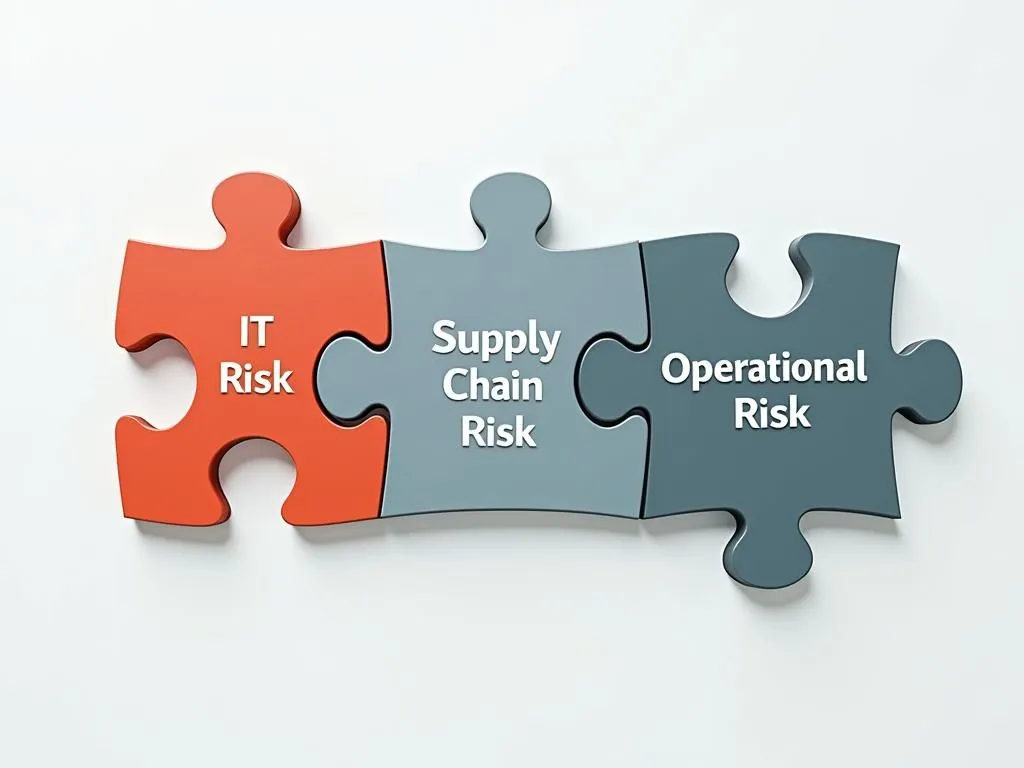
Why 2025 Needs One Complete Risk Assessment
Your IT, supply chain, and operations teams may all see the same risks—but they don’t measure them the same way. That gap could be the biggest security vulnerability in your organization today.
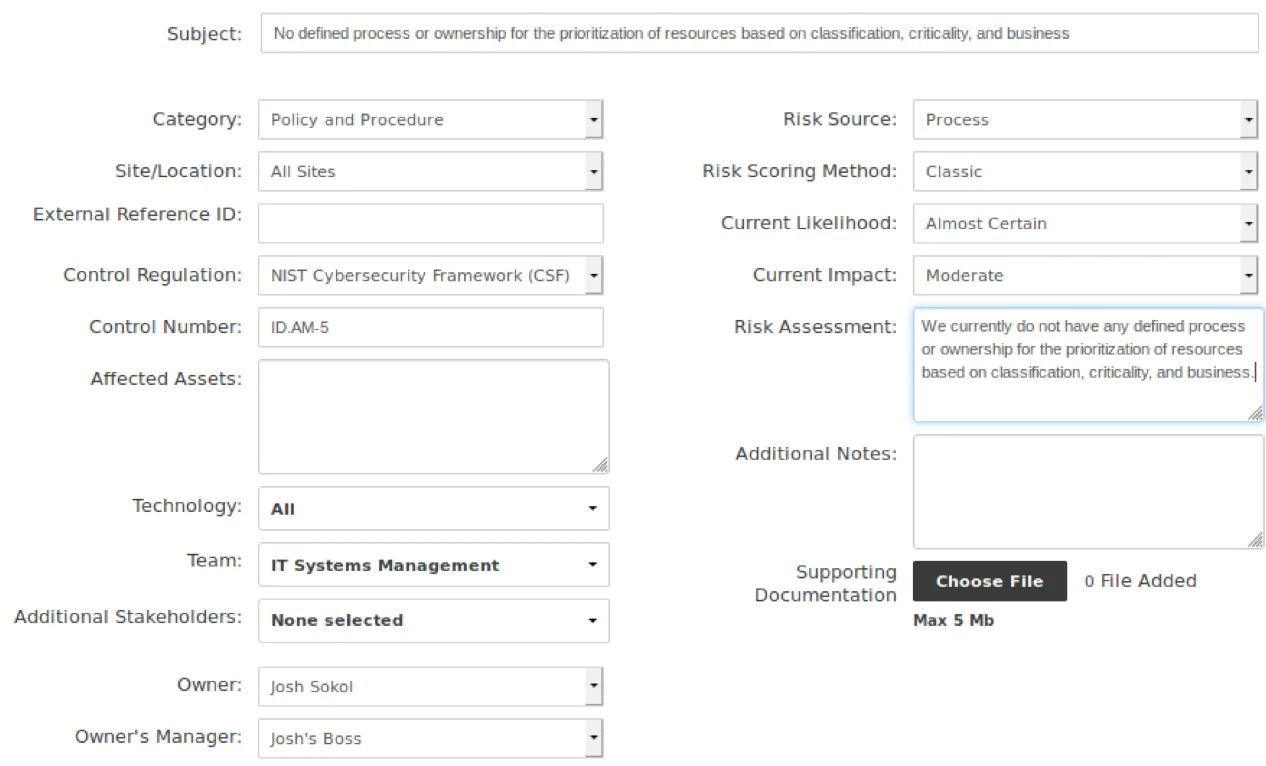
Assess Cybersecurity Maturity with the NIST CSF
Discover how we used the NIST Cybersecurity Framework (CSF) to assess maturity, identify risks, and build a strategic roadmap for National Instruments’ cybersecurity program. Learn how SimpleRisk streamlined this process to turn insights into actionable results!