Want max impact with your next cybersecurity hire? Consider a candidate who specializes in governance, risk, and compliance.
Why Your Next Cybersecurity Hire Should Be a Compliance Expert

You finally got approval for that new security team hire you've been coveting. Your instinct, if you're like most, will probably be to recruit a technical specialist, maybe a security engineer, another SOC analyst, or perhaps a pen tester. All essential skills for critical team positions, without a doubt. But our hyperfocus on technical roles might be obscuring a different skills gap, one that's growing apace in many organizations.
On top of all of the threats and vulnerabilities security teams face daily, there's now an expanding roster of regulatory requirements, contractual obligations, industry standards, security frameworks, customer questionnaires, audits, and internal policies that need to be satisfied and accounted for. At the same time, the rapid adoption of artificial intelligence (AI) is raising new questions about governance, privacy, data handling, and third-party risk.
These new wrinkles fundamentally alter what a well-rounded security team should look like. For security leaders with sufficient technical coverage, the next cybersecurity hire with the greatest impact may well be one who specializes not in speeds and feeds, but in security-focused governance, risk, and compliance (GRC).
Is the cybersecurity talent gap about more than just headcount?
For years, talk of the cybersecurity talent gap focused mostly on the number of unfilled jobs. Pundits counted open jobs requisitions and declared the industry in desperate need of bodies to fill slots. Training programs churned out wave after wave of entry-level security generalists with the idea that filling out rosters with newly-minted pros who could train up and move up in the organization would eventually solve the talent shortfall. It hasn't really worked out that way. And more recent research suggests the problem for modern security teams has become much more nuanced.
ISC2's 2025 Cybersecurity Workforce Study found that even in fully staffed organizations, 95% of respondents report at least one specific cybersecurity skills need, while 59% describe their specific skills shortages as significant or critical. For nearly one-third of respondents, GRC expertise is the skill area they lack the most.
What this shows is that an organization can have a reasonably staffed security team and still lack people who understand how to perform critical tasks like translating regulatory obligations into practical security controls. ISC2 found that 34% of respondents believe they had the right number of cybersecurity staff and another 44% reported only a slight staffing shortage. The real problem is whether those teams have the right mix of skills to keep pace with changing technology, evolving regulatory requirements, and constant operational demands.
Clearly, hiring another technical specialist won't address the crux of that problem.
Bottom line: The so-called cybersecurity talent gap is today a specialized skills gap rather than simply a shortage of people. Security teams still need technical expertise, but they also need professionals who understand risk, governance, and compliance. Adding headcount without addressing the lack of GRC capabilities leaves important cybersecurity responsibilities uncovered.
Why is compliance now a bigger part of CISO responsibilities?
Long gone are the days when the CISO could focus solely on protecting networks and responding to threats. They wanted a seat at the table in the C-suite and they got it. With that came the responsibility to align security efforts with multiple regulatory, contractual, and industry requirements.
Those things are now happening at all levels of the organization. Individual lines of business are dealing with strict obligations around data protection, incident reporting, access controls, third-party vetting, backup and business continuity, cloud services, and software supply chains, just to name a few.
The technical security controls that support these myriad requirements frequently overlap. Multifactor authentication, for example, helps satisfy requirements in several frameworks. The same can be said for access reviews, vulnerability management, logging, encryption, incident-response protocols, etc. Which is fine, but someone on the security team still needs to determine which requirements map to which controls. That someone also needs to identify gaps in the system, assign contacts and ownership, collect evidence, monitor exceptions, and be able to formally demonstrate that all of these controls continue to operate effectively.
Lacking that very specific GRC capability can leave even the most technically adept security teams scrambling to satisfy an audit, perform a new customer assessment, or adapt to some new or altered regulation. Compliance expertise isn't separate from security ops. The GRC role provides structure that connects security activity to all of the obligations the organization is on the hook for.
Bottom line: CISO responsibilities today include proving that security controls satisfy regulatory, contractual, and business requirements. Compliance professionals make that possible by translating obligations into security controls, identifying gaps, coordinating owners, and maintaining evidence needed to demonstrate that the security program is doing what the organization needs it to do.
How can a compliance expert make the security team better?
A compliance professional isn't going to replace security engineers, analysts, or other technical experts. The two skill sets aim to solve distinctly different problems.
Technical specialists, as always, determine how to secure systems at large. Compliance specialists, meanwhile, determine the requirements those systems and controls must satisfy and how the organization can demonstrate that they do. That requires domain expertise in a host of governance and regulatory issues outside the scope of most security practitioners.
A strong cybersecurity compliance professional can interpret frameworks and regulatory requirements, map overlapping controls, coordinate assessments, identify compliance gaps, establish evidence requirements, manage exceptions, and communicate expectations to both technical teams and business leaders. Just as importantly, that GRC expert can reduce the administrative burden currently placed on more technical-focused security team members.
When it comes to organizational compliance writ large, security engineers will still contribute evidence and explain how controls operate. But tying up scarce technical resources with tasks like interpreting regulatory language, maintaining compliance spreadsheets, tracking control owners, and chasing audit documentation is almost never the best use of the security engineer's time.
A GRC specialist can and should own much of that process while working closely with the security team's technical assets who actually implement and operate the controls.
Bottom line: A GRC expert brings an added layer of cybersecurity expertise to the team and the program. Far from replacing technical staff, the compliance expert role connects regulations, frameworks, risks, controls, owners, and evidence. This allows engineers and analysts to concentrate on implementing effective security while giving the organization a more formal, systematic way to demonstrate that controls are working to help the company meet its obligations.
Has AI adoption made GRC skills more valuable?
AI is increasing the pressure on security and compliance teams. As organizations continue their rapid deployment of AI, often through cloud services and third-party apps, they face new compliance issues related to data control, access, and privacy. AI adoption may also introduce GRC-centric concerns over vendor risk assessment, model behavior, systems monitoring, and acceptable use.
The NIST AI Risk Management Framework illustrates how closely technical risk and governance intersect when it comes to the uptake of AI in the enterprise. NIST's "Govern" function calls for organizations to understand and document legal and regulatory requirements, establish clear policies and processes, define responsibilities, inventory AI systems, and continually review AI risk management activities. NIST specifically describes governance as a "cross-cutting function" that should be integrated throughout the AI risk management lifecycle.
ISC2's workforce research deep dive earlier this year underscores the same challenge. AI was the most commonly identified cybersecurity skills need, cited by 41% of respondents. Among professionals focused on AI skills, 30% identified AI governance and policy implementation as important and 29% identified AI regulatory compliance.
Security teams in AI-capable organizations need people who both understand how AI works, and how it should be governed.
Bottom line: On top of some well-known technical risks, AI adoption can also create governance concerns related to data, accountability, third parties, policies, and regulatory obligations. Compliance expertise can help organizations turn those concerns into documented requirements and controls, giving security teams a formal, programmatic way to evaluate AI deployments rather than making governance decisions one project at a time.

What should CISOs look for when hiring a compliance pro?
The best candidate is one who understands that compliance is never simply an exercise in checking boxes. And one who's comfortable sitting astride the related-but-different disciplines of GRC and cybersecurity.
A skilled GRC domain expert grasps fundamental security concepts well enough to communicate with engineers and evaluate whether the organization's controls address the requirements they aim to satisfy. At the same time, these GRC specialists must be able to interpret often arcane regulatory and framework language and turn it into practical expectations that the company's technical and business teams can follow.
Experience in areas like control mapping, risk assessment, audit preparation, evidence collection, policy development, remediation tracking, third-party risk, and managing multiple frameworks would be highly valued for the compliance role in security. Communication skills are also essential. GRC pros often act as a bridge between and among legal teams, auditors, IT administrators, security engineers, executives, vendors, and business-unit owners. They must be able to explain in plain language and with a minimum of regulatory jargon.
Perhaps most importantly, a GRC domain expert on the security team must grasp the difference between passing an audit and genuinely reducing organizational risk. Their goal should always be to implement and maintain controls that work, with hard evidence demonstrating that they actually do work.
Bottom line: The strongest cybersecurity compliance candidates combine working knowledge of security with expertise in frameworks, controls, risk, assessments, and evidence. They should also be able to communicate effectively across technical and line-of-business teams. Look for someone who treats compliance as a way to strengthen security and accountability, not simply as an exercise in passing audits.
Can GRC technology make compliance experts more effective?
Hiring the right person into your new security GRC role may solve the skills problem, but that person still needs an effective way to manage all of the work at hand. Lots of disconnected spreadsheets = Lots of chaos. Managing multiple frameworks, hundreds of controls, a changing roster of responsible owners, and a steady stream of test results, remediation tasks, and supporting evidence gets unmanageable and unscalable pretty quickly without the right tools.
To get the most from your investment in a new compliance expert hire, consider a purpose-built GRC platform to provide structure for their work.
SimpleRisk, for example, allows organizations to map controls across multiple frameworks rather than treating every compliance requirement as an entirely separate exercise. It also supports defining tests against controls, running audits, recording results, attaching supporting evidence, and linking failed tests to identified risks. Those results can then roll up into an organization's broader view of their compliance posture.
This can be especially valuable when one control is being used to support multiple requirements. Rather than repeatedly testing the same control for separate frameworks, organizations can use control mappings to reduce redundancy and show clearly how security activities support multiple compliance obligations. SimpleRisk currently supports framework and control mapping across a broad range of regulatory and security standards.
Technology won't replace the judgment of a compliance professional. What it will do is give that professional a better way to apply their expertise.
Bottom line: A purpose-built GRC platform gives compliance experts a structured way to connect frameworks, controls, tests, owners, evidence, risks, and remediation activities. It eliminates time-consuming spreadsheet maintenance and one-off evidence reconstruction allowing the GRC pro to focus on identifying gaps, improving controls, and helping the CISO understand where the organization's compliance and security risk really stand.
Should a compliance expert really be your next cybersecurity hire?
Not every organization is going to replace its next security engineer requisition with a compliance role. Nor should they. If fundamental technical capabilities are still missing on your team, those gaps still need to be filled.
But CISOs should resist the assumption that every cybersecurity staffing problem calls for another technician. Security responsibilities are much broader today; the effectiveness of any security program depends on the organization's ability to connect technology with real-world risk, as well as policy, regulation, governance, and accountability. AI adoption is only accelerating that change.
CISOs need to move beyond the simple calculus of whether they have enough people. They need to be asking if they have a handle on all of the skills required to run the security program they need now and into the future. For a growing number of organizations, cybersecurity compliance expertise increasingly shows up as one of the most glaring missing pieces.
Bottom line: The right next cybersecurity hire for any organization depends on the gaps in the existing security team. When technical coverage is strong and regulatory, governance, auditing, or AI oversight demands are growing, a compliance expert is often the best choice. A GRC domain expert on the team fills a critical skills gap and can help turn individual security controls into a coherent, measurable, defensible security methodology.
Want to learn more? Check out these related posts:
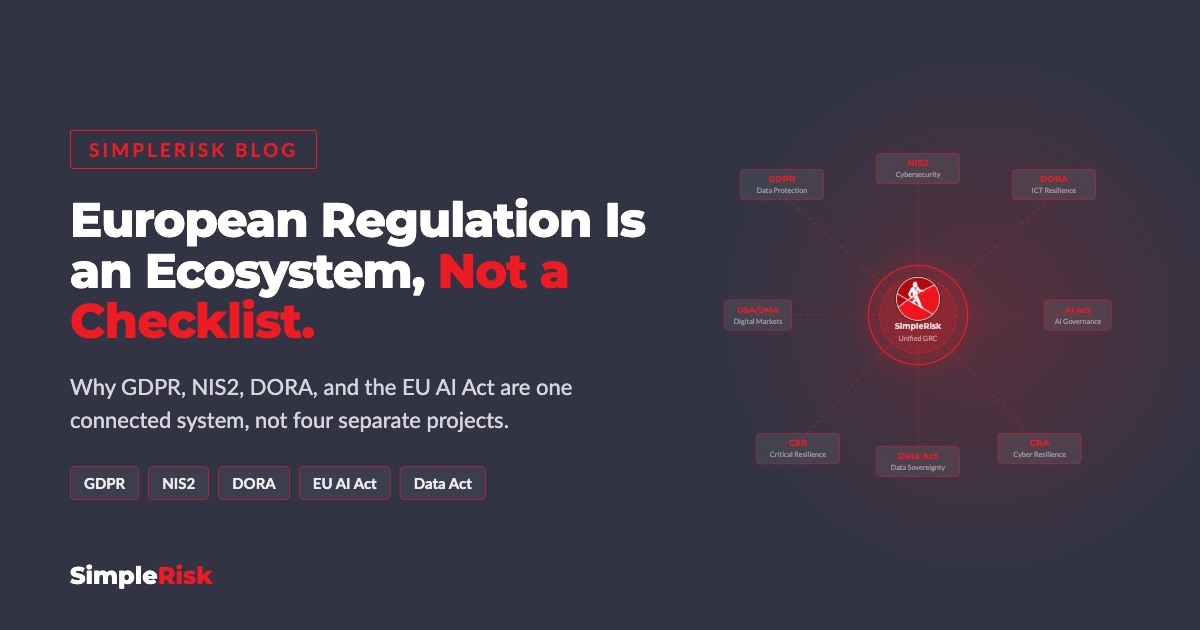
European Regulation Is an Ecosystem, Not a Checklist
GDPR, NIS2, DORA, and the EU AI Act are not separate projects. They overlap on the same data, systems, and vendors, and treating them as one connected system beats a drawer full of checklists.

France and Italy Tighten Email Tracking Rules: How to Adapt Your Compliance Program
European privacy watchdogs are taking a harder line on digital tracking. If you do business in Italy or France, now's the time to review your use of tracking capabilities across all apps and platforms that generate email.
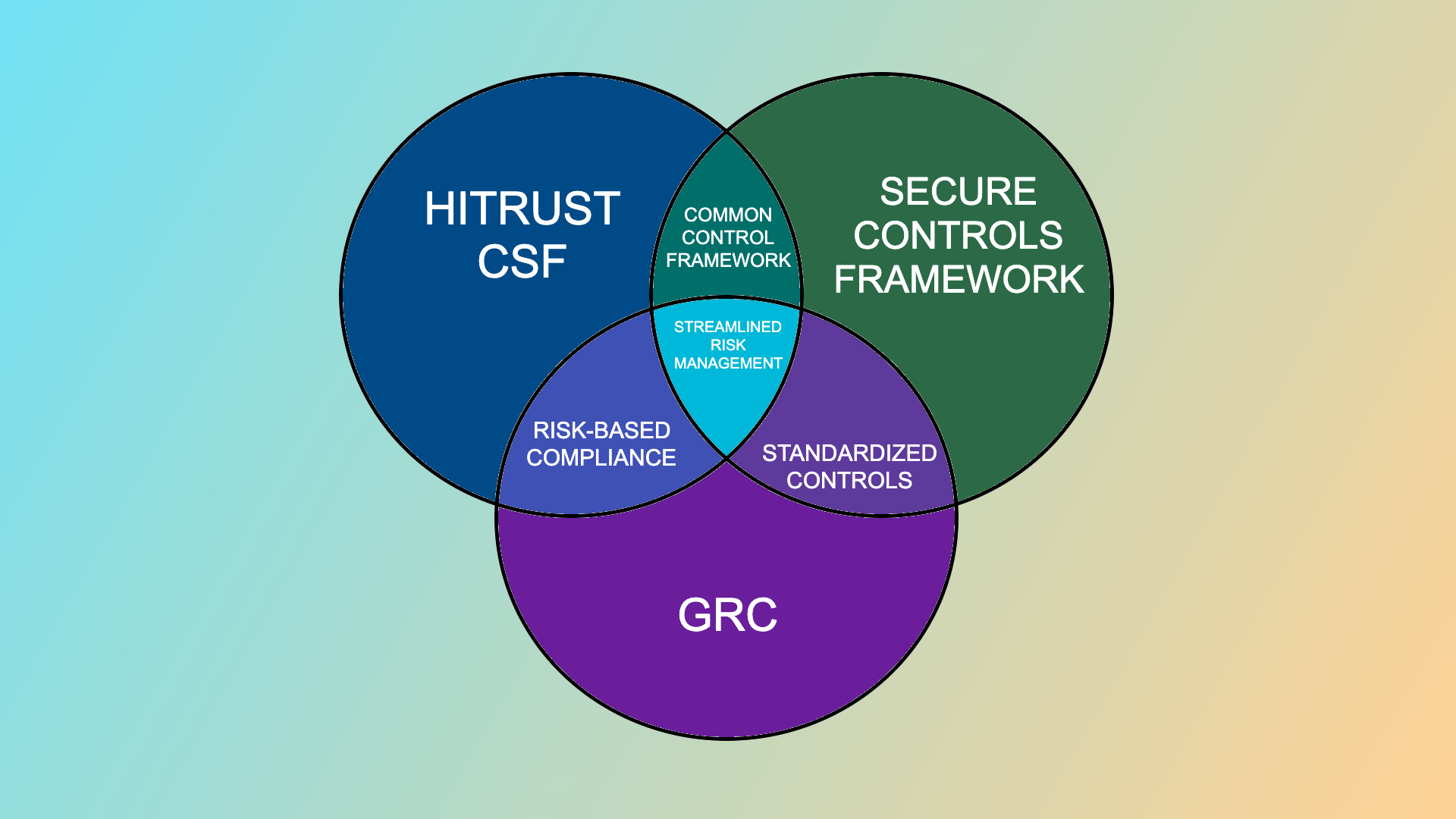
Integrate HITRUST CSF and SCF in Your GRC Strategy
Struggling to align multiple compliance frameworks in your GRC program? Learn how to integrate HITRUST CSF and the Secure Controls Framework in SimpleRisk to streamline compliance, enhance security, and leverage AI for a more efficient risk management strategy.