
Every GRC vendor is announcing AI capabilities right now. Here’s what we actually do, what we don’t do, and where we’re going; in plain language.
We're Not Going to Pretend
Something is happening in the GRC software market right now, and it's worth being direct about it.
Every vendor in this space, including the big ones, is currently announcing AI capabilities. Copilots. Autonomous compliance. Intelligent risk management. Agentic GRC. The language is getting more confident by the quarter, and the distance between what's claimed in a sales demo and what's actually in production is growing.
We're not going to do that.
SimpleRisk is close enough to our customers that we can't afford to mislead them, and our engineering team is honest about what it can build. So here's where we actually are.
"Most of what's being called 'agentic GRC' right now is a chatbot attached to an aging workflow engine; presented as if the future has arrived."
What's Actually Changing in the Market
The GRC analyst community is describing a genuine architectural shift, not just another product cycle. For two decades, most GRC platforms competed on whether they had a risk register, a control testing workflow, a policy attestation module, a dashboard. Buyers built RFP checklists and compared features line by line.
That model is losing its usefulness. Not because those features don't matter. They do. But because AI is collapsing the time it takes to build them. Capabilities that once required a year of engineering can now be prototyped in a fraction of that time. The feature checklist is becoming the price of admission, not the point of differentiation.
What's actually differentiating the next generation of GRC is harder to fake: connected context, behavioral evidence, and governed action. A platform that can connect a risk to the control that addresses it, to the framework obligation that requires it, to the evidence that proves it's working, and surface that picture to a CISO who needs to brief a board in 48 hours, that's genuinely different from a risk register with a chatbot on top.
The warning that serious analysts are issuing right now: most AI in GRC is theater. It makes old processes run faster without making them better. It generates polished language that disguises poor evidence and disconnected accountability.
We think that warning is correct. And we want to be on the right side of it.
What SimpleRisk Does Today
SimpleRisk is a purpose-built GRC platform for mid-market security and compliance teams. We've been at this since 2013. Our starting point was an open-source project, which means we've had to earn adoption the honest way. By being genuinely useful, not by having a marketing budget that outpaces the product.
Here's what we do well, in plain terms:
- Risk management that actually connects things. Your risk register is linked to controls, assets, and vulnerabilities. Not siloed in a spreadsheet with a better interface.
- Compliance management across real frameworks. ISO 27001, NIST CSF 1.1 and 2.0, SOC 2, HIPAA, PCI-DSS with control testing and evidence collection built in, not bolted on.
- Deployment flexibility with no tradeoffs. Self-hosted or SaaS: same features, same price. If data sovereignty is a requirement, you don't pay a penalty for it.
- Fast time to value. We aren't built for a 6-month professional services engagement. Most teams are running real workflows within days, not quarters.
- Pricing that doesn't require a committee. Pricing that doesn't require a committee. The kind of number a CISO can approve without escalating. No surprise professional services dependency.
What We're Building Next
The honest version of "AI in SimpleRisk" isn't a copilot that summarizes your risk register. That's useful, but it's not the transformation the market is moving toward.
What we're building is AI-assisted program guidance: intelligence that connects the dots your team is already tracking. When a new risk gets scored, the platform should surface which controls in your framework are relevant, which gaps exist, and what the likely remediation path looks like. Not a generic suggestion from a large language model. Context drawn from your actual risk register, your mapped frameworks, your control test history.
We're also expanding our framework coverage to include NIST AI RMF and DORA, because the regulatory environment is moving and our customers need to move with it.
We'll tell you when these capabilities are in production. Not when they're on a roadmap slide.
The Right Question to Ask Any GRC Vendor
The market is shifting from feature comparisons to program value. The question isn't whether a vendor has a risk register or a compliance module or an AI assistant. The question is whether their platform helps your organization make better decisions, and can prove it.
When you evaluate SimpleRisk, we want you to ask the hard questions. What does the AI actually do in production today? How does the platform connect risks to controls to evidence to decisions? What happens when the AI is wrong? What gets logged? What can be audited?
If a vendor can't answer those questions plainly, that's useful information.
We can answer them. We'd welcome the conversation.
See how SimpleRisk works. No deck. No theater. Just the product.
Want to learn more? Check out these related posts:
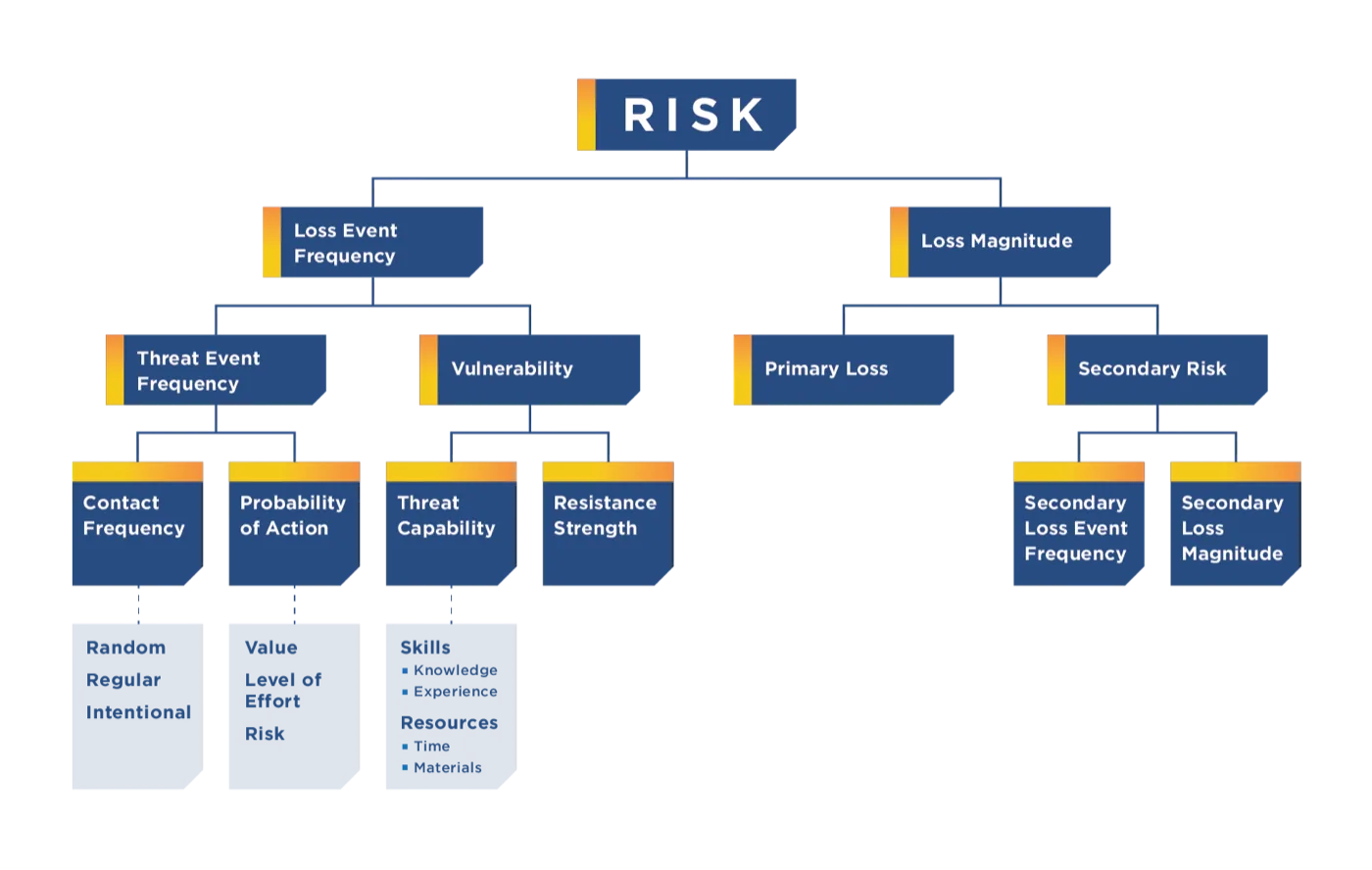
Using AI with FAIR for Precision and Scalability
Discover how combining the FAIR methodology with artificial intelligence revolutionizes risk management by providing precise, scalable, and data-driven insights. Learn how this powerful synergy enhances decision-making, optimizes resource allocation, and transforms how organizations approach risk quantification.
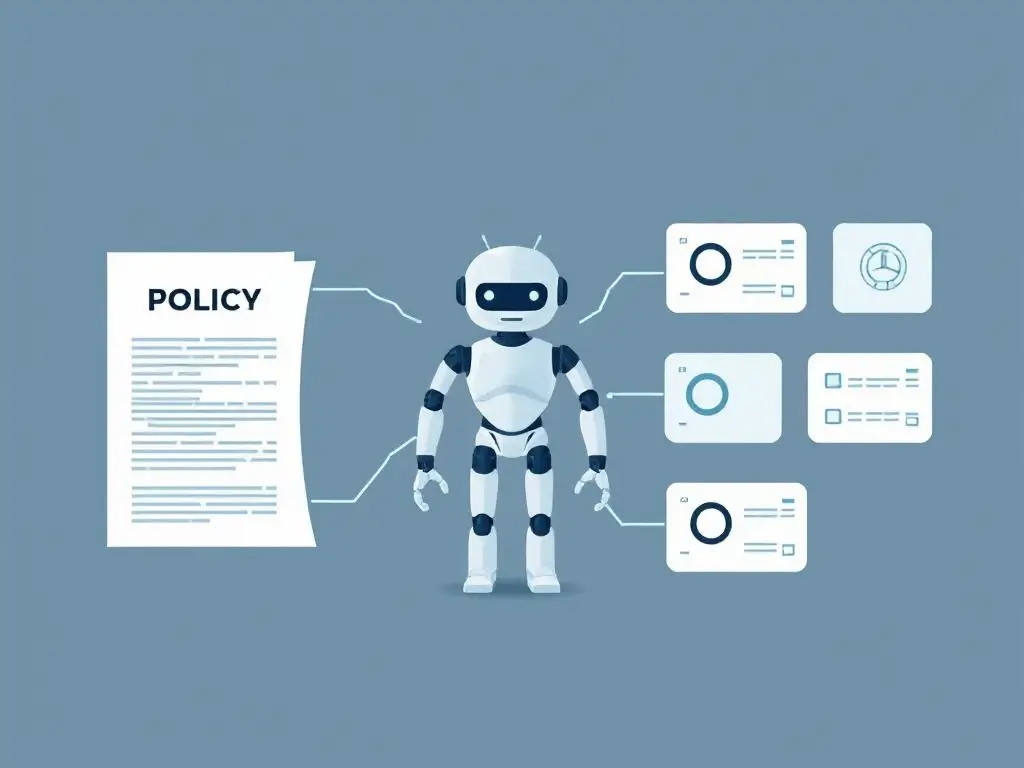
What AI Can (and Can't) Do for Control Mapping
Struggling to match your policies to hundreds (or thousands) of controls? Learn how we combined AI, old-school keyword analysis, and smart engineering in SimpleRisk to turn a months-long task into minutes.
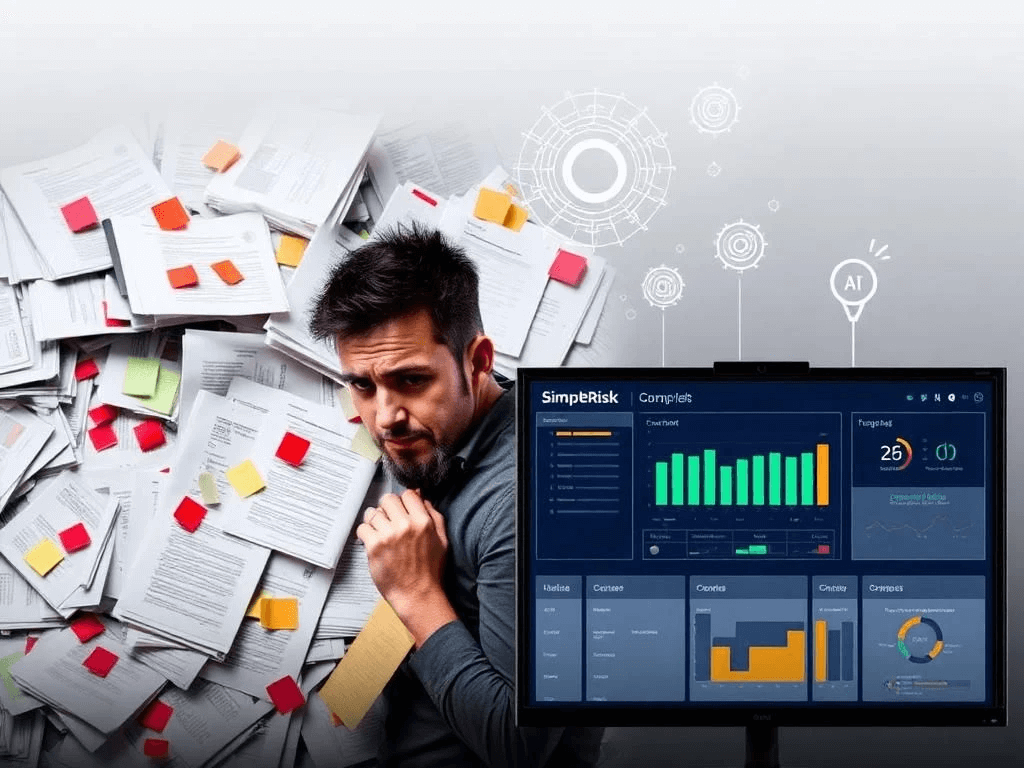
From 16 Vendor RFIs to One Assessment
Tired of juggling 16 separate vendor RFIs every year? Discover how SimpleRisk transformed one client’s chaotic third-party assessments into a single, streamlined process.